Have you ever put fresh green beans in the refrigerator only to find them shriveled, rubbery, or spoiled over time? 🫘
Green beans are high-respiration vegetables that experience rapid moisture loss and Vitamin C degradation after harvest. When frozen without proper pretreatment, the active lipoxygenase enzyme causes bad odors, off-flavors, and discoloration.
In this guide, based on official guidelines from the USDA and the UC Davis Postharvest Technology Center, we share a 3-step scientific storage guide to preserve the crisp texture and nutrition of green beans. 🛡️
Food Safety & Scientific Evidence
This content is based on USDA & MFDS & UC Davis Postharvest Center.
 FreshSelf
Zero waste! Your smart storage assistant
FreshSelf
Zero waste! Your smart storage assistant








1. Scientifically Proven Storage Guide
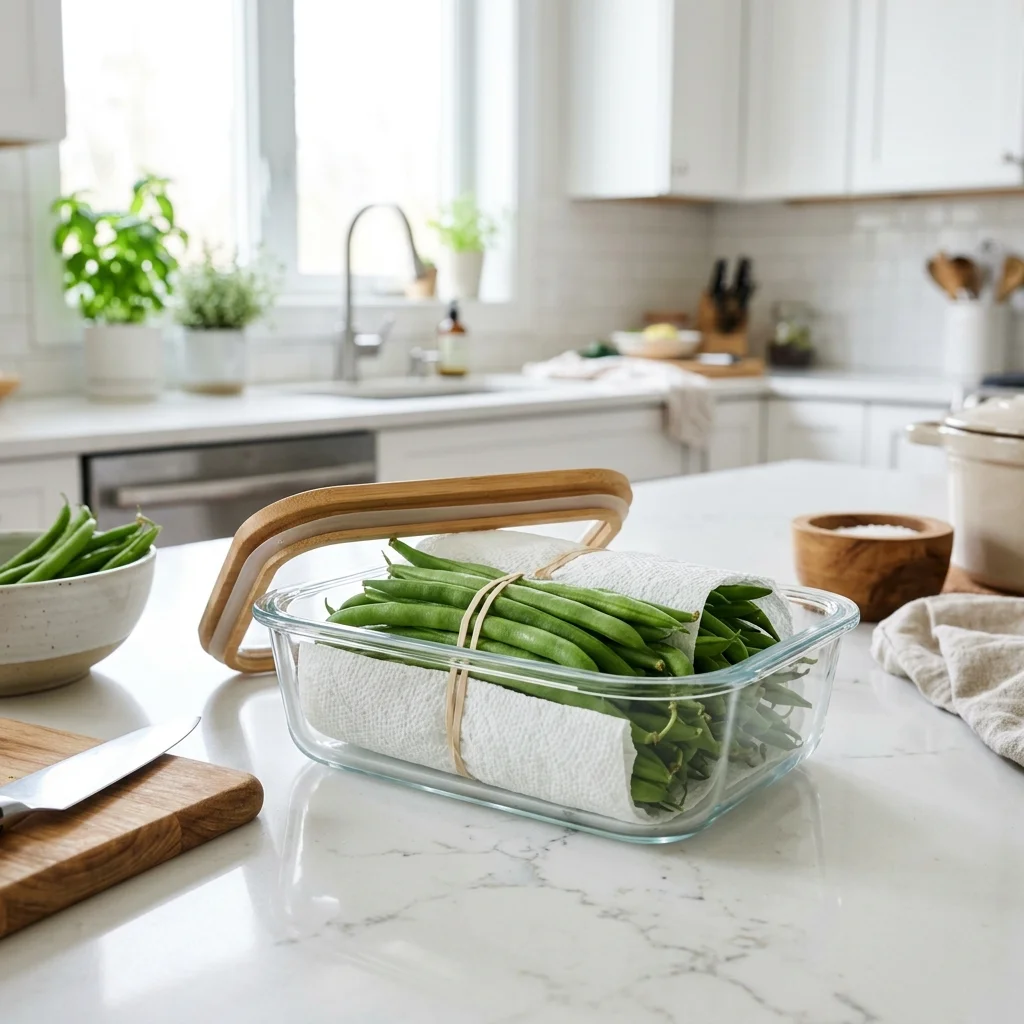
Wrap unwashed green beans in paper towels and refrigerate — Cold Storage (7–10 Days) 🫘
Green beans thrive at 4–7°C (39–45°F) with high relative humidity ( ~ 95%). 💡 Storage Tip: Place unwashed green beans wrapped in paper towels into an airtight container or zip-top bag in the crisper drawer to prevent moisture evaporation.
Blanch in boiling water for 30 seconds and cool in ice water — Enzyme Inactivation ♨️
Blanching is required for long-term storage. 💡 Storage Tip: Submerge green beans in boiling water for 30 seconds, then immediately transfer to an ice bath to stop cooking. This inactivates lipoxygenase while locking in color and nutrients.
Dry thoroughly and seal for frozen storage — Blanched Freezing (180–240 Days) 🧊
Blanched green beans can be stored frozen for over six months. 💡 Storage Tip: Pat blanched green beans completely dry with paper towels, place in a freezer-safe airtight bag, remove excess air, and store at -18°C (0°F) or below.
2. Essential Storage Rules and Cautions
Freezing raw green beans leaves lipoxygenase enzymes active, which breaks down fatty acids and causes off-flavors and browning during frozen storage. Brief blanching is essential to deactivate these enzymes.
Green beans lose moisture rapidly post-harvest. Low storage humidity causes wrinkling and tough textures. Wrap them in paper towels inside an airtight container to maintain ~95% relative humidity.
📌 Frequently Asked Questions (FAQ)
Why is blanching necessary before freezing green beans? ▼
Freezing raw green beans keeps lipoxygenase enzymes active, leading to nutrient loss, off-odors, and loss of green color during storage. A quick 30-second blanch inactivates these enzymes, locking in flavor and color for 6 to 8 months.
Why did my refrigerated green beans become wrinkled and tough? ▼
This occurs due to moisture loss caused by high post-harvest respiration. Green beans require ~95% humidity; wrapping them in paper towels inside an airtight container at 4–7°C is essential to prevent drying.