Have you ever loosely tied an opened bag of pasta, stored it in the pantry, and later found it stale, soft, or infested with bugs? 🍝
Dried pasta has a low moisture content (under 12%), making it ideal for long-term storage. However, it readily absorbs ambient moisture, light, and surrounding odors, while easily becoming a target for grain pests like flour moths and weevils. Improper storage degrades the flavor of durum wheat and leads to quality loss.
In this guide, introduces a scientifically proven 3-step storage guide recommended by USDA and food safety experts to keep your dried pasta fresh for years. 🛡️
Food Safety & Scientific Evidence
This content is based on USDA & MFDS.
 FreshSelf
Zero waste! Your smart storage assistant
FreshSelf
Zero waste! Your smart storage assistant







1. Scientifically Proven Storage Guide
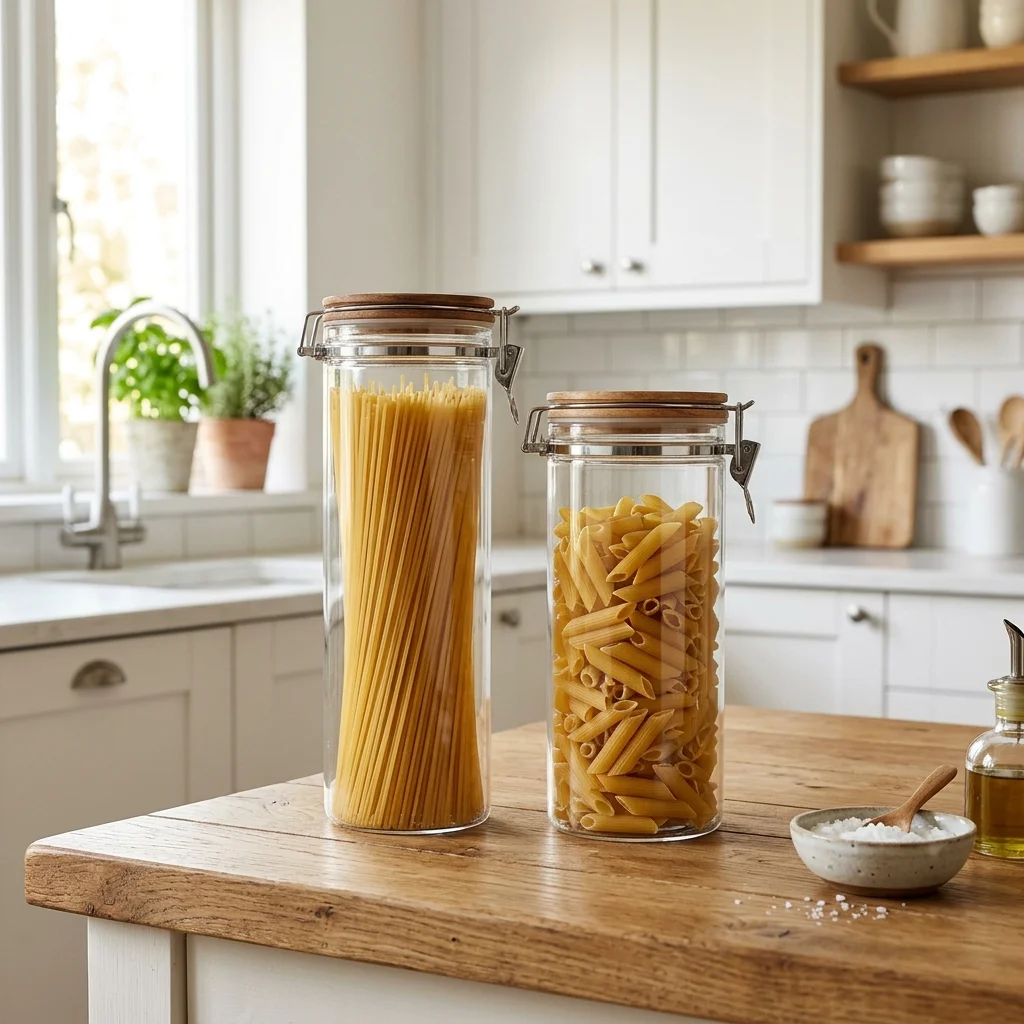
Transfer to a dedicated airtight pasta container — Complete Protection Against Moisture & Pests 📦
The key to storing dried pasta is completely blocking air and moisture. 💡 Storage Tip: Store long pasta vertically in tall glass jars or BPA-free airtight plastic containers. This provides an effective barrier against humidity and prevents pest intrusion.
Store in a cool, dark place away from direct sunlight — Block Heat & Light ☀️
Light and heat degrade the protein and nutrient structure of pasta. 💡 Storage Tip: Avoid hot, humid spots near stovetops or sunny windowsills. Store in a dark pantry or cupboard with a stable temperature (15–20°C / 59–68°F).
Keep separate from strong-smelling foods — Prevent Odor Absorption 🛡️
Dried pasta acts like a sponge, absorbing volatile odor molecules from its surroundings. 💡 Storage Tip: Do not store pasta near spices, garlic, onions, or household detergents. Keeping it sealed in airtight containers preserves its pure wheat flavor.
2. Essential Storage Rules and Cautions
Dried pasta easily absorbs ambient moisture. The high humidity inside a refrigerator and condensation from frequent door opening make the pasta soggy and create an ideal environment for mold growth. Always store it at cool room temperature.
Opened plastic bags have tiny gaps that allow humidity to enter and enable grain pests like meal moth larvae to bore through. Transfer opened pasta immediately to a completely airtight container.
📌 Frequently Asked Questions (FAQ)
What is the actual shelf life of dried pasta? ▼
Unopened dried pasta can last for 1–2 years or more when kept in a cool, dry place. Even after opening, if stored in an airtight container, it maintains its quality and taste for at least 1 year.
How should cooked pasta be stored? ▼
To prevent cooked pasta from swelling or sticking together, toss it lightly with olive oil, place it in an airtight container, and refrigerate for 3–5 days or freeze in single-serving portions for up to 1 month.