Have you ever bought healthy, high-protein turkey only to find it smelling off or turning slimy after a few days in the fridge? 🦃
As with most poultry, turkey has high moisture and protein levels, creating an ideal environment for pathogenic bacteria such as Salmonella and Campylobacter to multiply. Controlling moisture from juices and preventing cross-contamination are the ultimate keys to safe consumption.
In this guide, shares a scientifically proven 3-step turkey storage guide based on guidelines from the USDA FSIS and MFDS to block foodborne bacteria and maintain maximum freshness safely. 🛡️
Food Safety & Scientific Evidence
This content is based on USDA FSIS & MFDS & RDA.
 FreshSelf
Zero waste! Your smart storage assistant
FreshSelf
Zero waste! Your smart storage assistant









1. Scientifically Proven Storage Guide
Pat dry instead of washing with water — Prevent Cross-Contamination 🧼
Do not wash under running water. After opening the packaging, thoroughly pat the inner and outer surface dry with paper towels to remove residual blood and moisture. 💡 Storage Tip: Eliminating surface moisture deprives bacteria of a breeding ground and prevents aerosolizing pathogens.
Tightly wrap and refrigerate at cold temperatures — Short-Term Storage (1–2 Days) ❄️
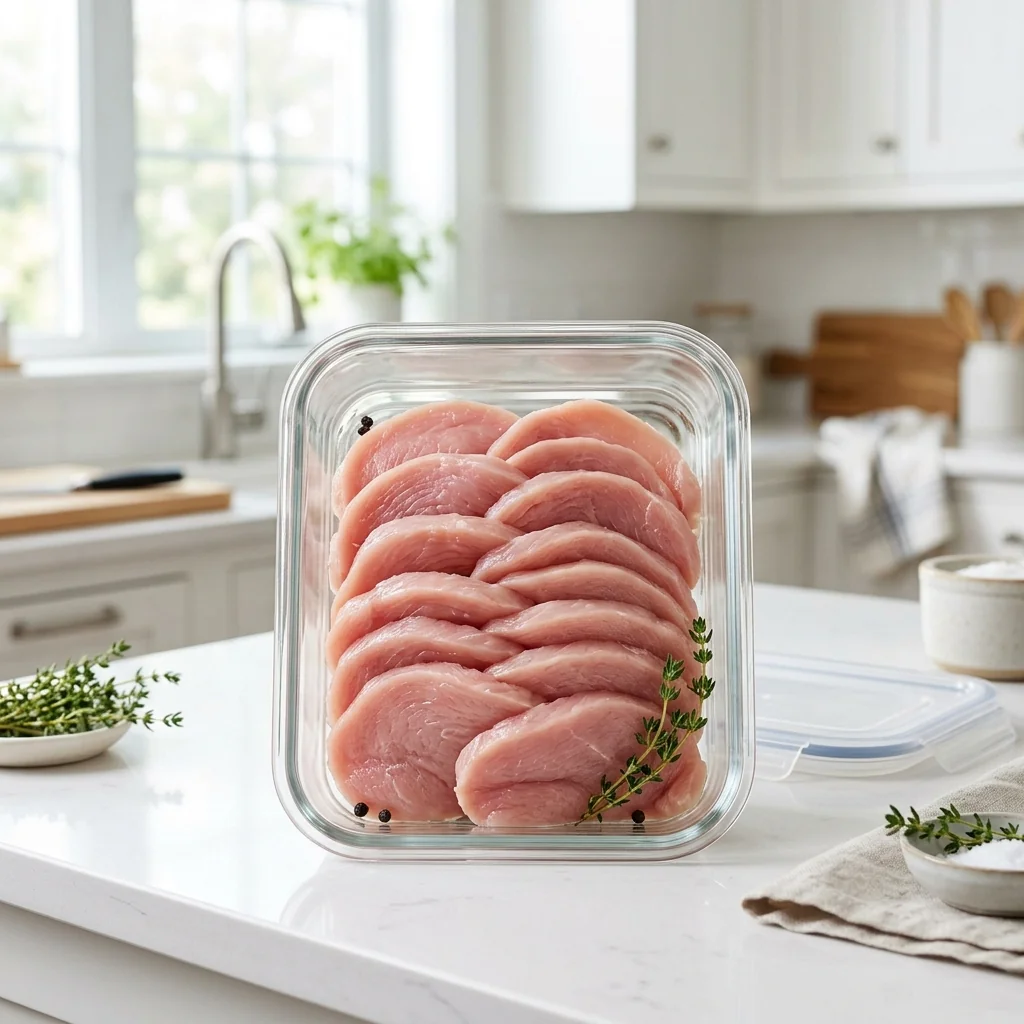
Minimizing air contact inhibits fat oxidation and bacterial growth. 💡 Storage Tip: Wrap sliced or whole raw turkey tightly with plastic wrap and place it inside an airtight container on the bottom fridge shelf (0–4°C). Raw turkey has a short fridge life of 1–2 days, so cook it promptly.
Portion and double seal for freezing — Long-Term Storage (9–12 Months) 🧊
For long-term storage, freeze below -18°C. 💡 Storage Tip: Portion turkey into meal-sized servings, wrap tightly in plastic wrap, place inside freezer Ziploc bags or airtight containers, and squeeze out all excess air. Raw whole turkey or parts stay fresh for 9–12 months, while ground turkey lasts 3–4 months.
2. Essential Storage Rules and Cautions
Rinsing raw poultry under tap water splatters bacteria-laden droplets onto your sink, countertops, and nearby foods, causing widespread Salmonella cross-contamination. Pat the surface dry with clean paper towels instead.
Raw turkey juices (drips) may carry pathogens. To prevent drippings from contaminating fresh produce or ready-to-eat foods, always place raw turkey in an airtight container on the lowest refrigerator shelf.
📌 Frequently Asked Questions (FAQ)
What is the safest way to thaw frozen turkey? ▼
The safest method is slow low-temperature thawing in the refrigerator at 0–4°C (takes roughly 24 hours per 4–5 lbs / 2 kg). For faster thawing, submerge sealed turkey in cold tap water, changing the water every 30 minutes. Never thaw at room temperature or in warm water, as bacteria multiply rapidly in the Danger Zone (4–60°C / 40–140°F).
How long does cooked turkey stay good in the refrigerator? ▼
Cooled cooked turkey stored in an airtight container at 0–4°C lasts 3–4 days. For longer storage, portion and freeze cooked turkey immediately for up to 2–3 months.