Have you ever left vinegar on a sunny windowsill or right next to your stovetop? 🍾
Thanks to its high concentration of acetic acid, vinegar is a self-preserving food with exceptional natural shelf stability. However, exposure to direct sunlight and high heat can degrade its delicate flavor, alter its color, or cause cloudy sediment to form from interactions with airborne microbes.
In this guide, introduces a scientifically proven 3-step storage guide based on safety guidelines from food safety authorities to help preserve vinegar’s acidity and rich taste for years to come. 🛡️
Food Safety & Scientific Evidence
This content is based on FDA & MFDS.
 FreshSelf
Zero waste! Your smart storage assistant
FreshSelf
Zero waste! Your smart storage assistant






1. Scientifically Proven Storage Guide
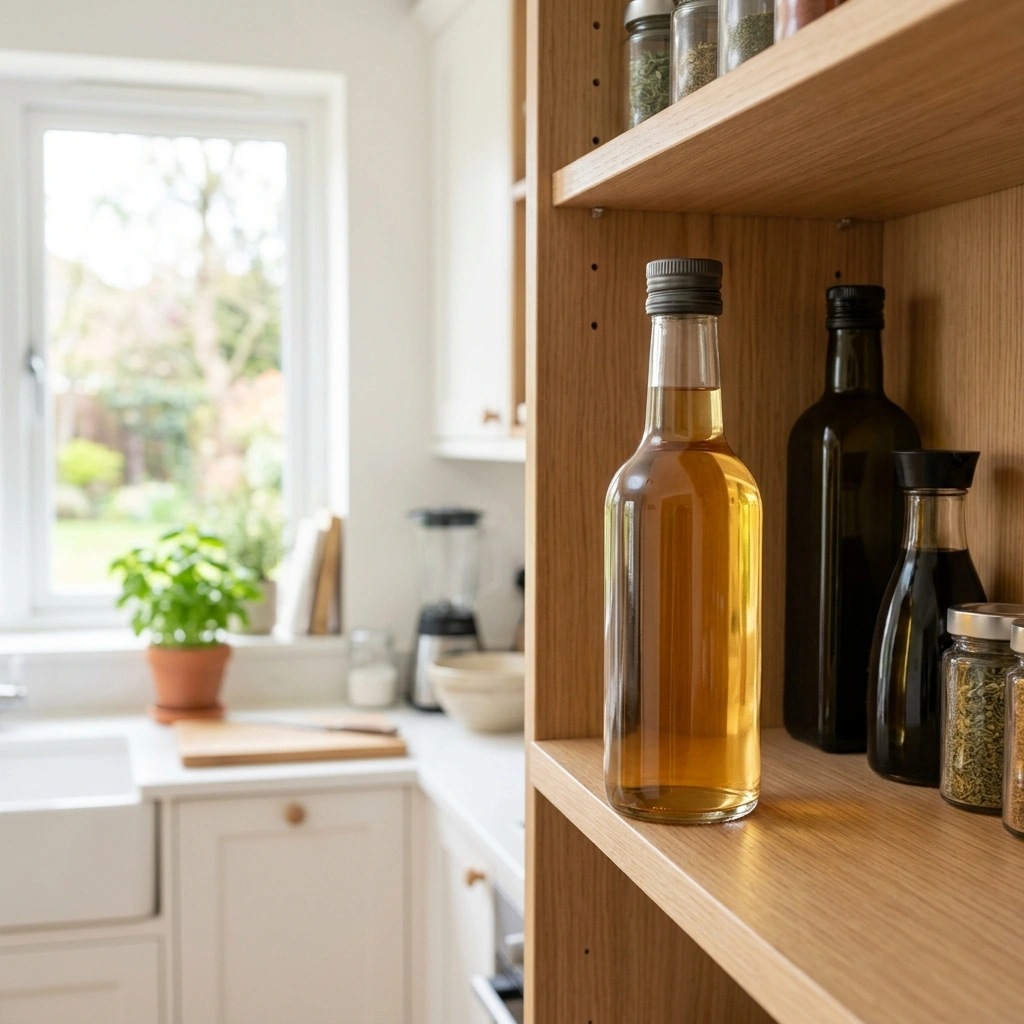
Block direct sunlight and heat sources — Dark Pantry Storage (15–25°C) 📦
Exposing vinegar to heat or light accelerates oxidation, degrading both color and flavor profile. 💡 Storage Tip: Store vinegar in a cool, dark cabinet or pantry (15–25°C) away from windows and hot kitchen appliances.
Wipe the spout and cap tightly after use — Preserve Acidity & Flavor 🍾
Leaving the bottle unsealed lets volatile acetic acid escape, lowering the overall acidity. 💡 Storage Tip: Clean the bottle neck after pouring and seal the cap tightly to minimize contact with oxygen.
Keep in the original glass or food-safe plastic bottle — Container Safety 🏺
Decanting vinegar into unverified jars runs the risk of contamination or chemical reactivity. 💡 Storage Tip: Maintain vinegar in its original commercial glass or HDPE/PET plastic bottle for maximum safety.
2. Essential Storage Rules and Cautions
Acetic acid in vinegar reacts aggressively with metals such as iron, aluminum, and copper, causing corrosion and leaching metallic flavors into the liquid. Always keep vinegar in its original glass or food-safe plastic bottle.
Prolonged exposure to air causes acetic acid to evaporate, weakening acidity and aroma. It also allows dust, fruit flies, or wild bacteria to enter, which can lead to cloudy sediment formation.
📌 Frequently Asked Questions (FAQ)
Cloudy sediment formed at the bottom of my vinegar bottle. Is it safe? ▼
Yes! That cloudy formation is known as the 'Mother of Vinegar,' a natural byproduct of acetic acid bacteria and cellulose. It is completely harmless and can be strained out with a coffee filter or consumed safely.
Does vinegar expire or require refrigeration? ▼
Vinegar's high acidity naturally inhibits bacterial growth, so refrigeration is unnecessary and it has an almost indefinite shelf life. For peak flavor quality, however, it is best used within 2–3 years after opening.