Have you ever bought a large bunch of green onions and left them in the fridge, only to find the leaves slimy, wilted, and decaying a few days later? 🌿
Green onions are a versatile staple vegetable, but their high moisture content and post-harvest physiological trait—negative geotropism (growing upward against gravity)—make them spoil quickly if improperly stored. Storing them horizontally causes them to expend energy trying to bend upward, accelerating wilting and yellowing.
In this guide, shares a scientifically proven 3-step storage guide based on guidelines from the USDA and RDA to control moisture, prevent energy depletion, and keep your green onions crisp and fresh for over a month. 🛡️
Food Safety & Scientific Evidence
This content is based on RDA & MFDS & USDA.
 FreshSelf
Zero waste! Your smart storage assistant
FreshSelf
Zero waste! Your smart storage assistant







1. Scientifically Proven Storage Guide
Wrap dry, unwashed green onions in newspaper and store upright — Room Temp Storage (5 Days) 🌿
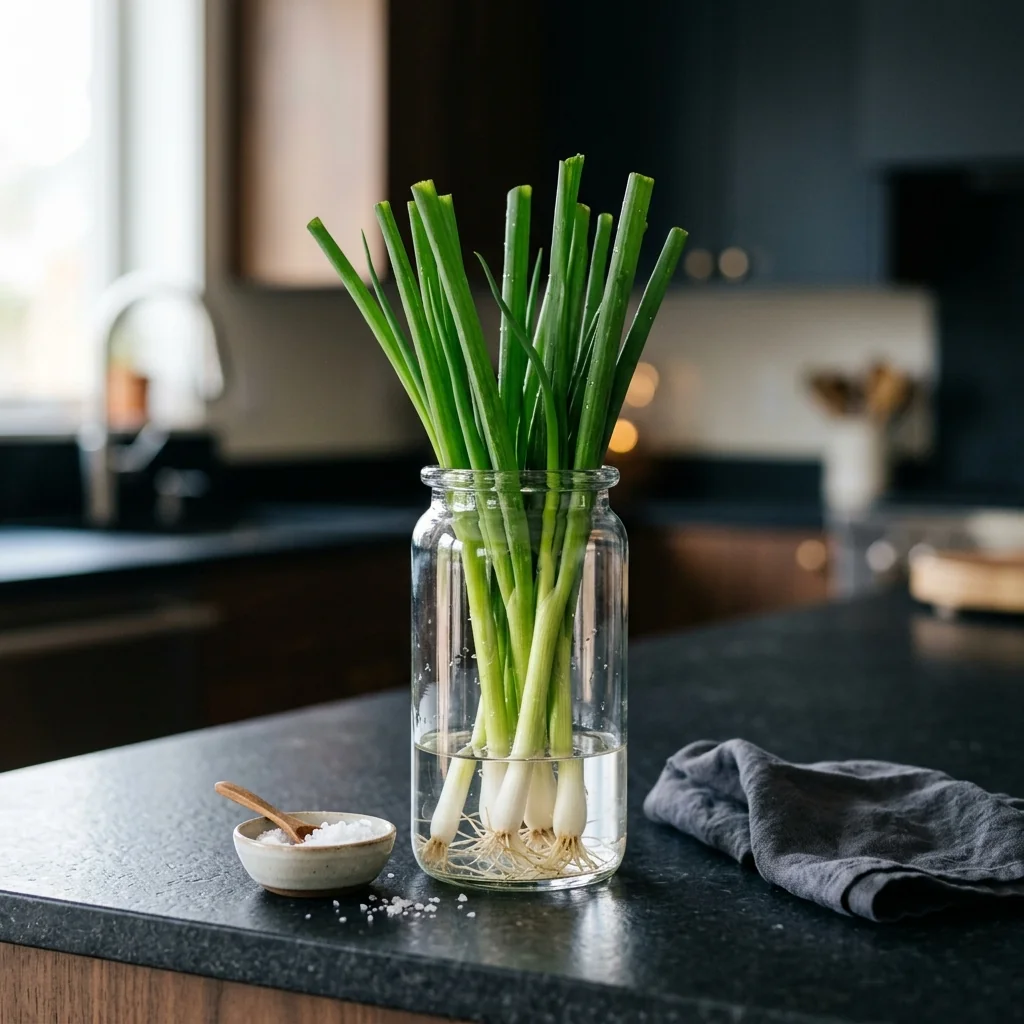
Wrap dry, unwashed green onions loosely in newspaper or parchment paper. 💡 Storage Tip: Stand them vertically in a cool, well-ventilated, shaded area (10–15°C / 50–59°F) with the roots pointing down. Maintaining a vertical position matching their natural growth direction minimizes gravity stress and delays wilting.
Dry washed green onions completely and store upright with paper towels — Cold Storage (14–21 Days) 📦
Washed green onions must have 100% of their surface moisture removed using paper towels or a salad spinner. 💡 Storage Tip: Cut the green onions in half to separate green leaves and white stems. Line the bottom of a tall airtight container with paper towels and place the green onions vertically, roots facing down, in the crisper drawer (0–4°C). The paper towel absorbs condensation, keeping them crisp for up to 3 weeks.
Chop, air-dry surface moisture, and freeze sealed — Frozen Storage (180 Days) ❄️
If you cannot consume them within 2 weeks, chop and freeze them for long-term storage. 💡 Storage Tip: Freezing chopped green onions immediately ruptures cell walls, releasing sticky mucin. Spread chopped green onions on a tray at room temperature for 10–15 minutes to air-dry surface moisture before sealing in a Ziploc freezer bag (-18°C or below). Add them directly to dishes while frozen without thawing to prevent mushiness.
2. Essential Storage Rules and Cautions
Sealing washed green onions while wet traps moisture, causing bacterial soft rot and producing sticky, slimy mucin within a single day. Always dry them completely before wrapping or storing.
The hollow green leafy parts contain higher moisture levels and more stomata than the white stalks, causing them to decay much faster. Cutting and storing these two parts in separate containers prevents cross-decay and extends overall shelf life.
📌 Frequently Asked Questions (FAQ)
What is the scientific reason for wrapping green onions in newspaper and storing them upright? ▼
Vegetables retain their physiological growth instinct even after harvest—a response known as negative geotropism. When green onions are laid flat, their respiration rate spikes and sugar consumption jumps as they expend energy trying to bend their stalks upward, causing rapid yellowing and wilting. Storing them vertically with root ends down reduces gravitropic stress and preserves energy.
How can I prevent sticky slime and clumping when freezing chopped green onions? ▼
When green onions are sliced, their damaged cell walls release a viscous polysaccharide called mucin along with moisture. Freezing them immediately causes ice crystals to bind this liquid, forming a solid, slimy clump. Spreading chopped green onions on a tray to air-dry surface moisture for 10–15 minutes before freezing keeps the pieces loose, allowing you to easily pour out the exact amount needed.