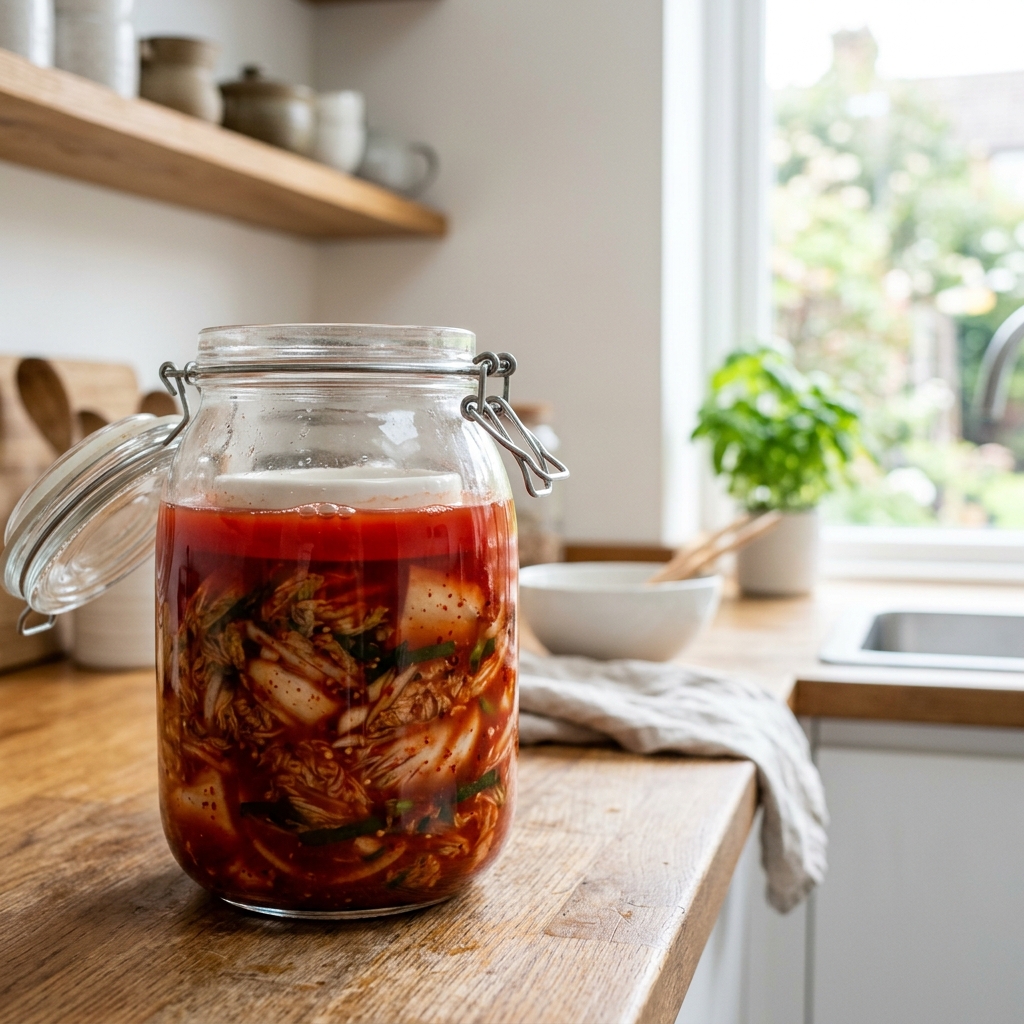
Kimchi is an essential staple on the dining table! However, if stored improperly, it can quickly turn overly sour or develop a white film on the surface, making you wonder if it should be thrown away. 🥬
Kimchi is a prime living fermented food powered by beneficial lactic acid bacteria. During fermentation, these bacteria produce organic acids that create its deep, complex flavor. However, higher temperatures accelerate over-acidification, while contact with air allows film-forming yeast to grow and form a white layer.
In this guide, based on scientific facts verified by the World Institute of Kimchi (WiKim) and food safety experts, we introduce a 3-step optimal storage method to preserve kimchi’s crisp texture and rich flavor over a long time. 🛡️
Food Safety & Scientific Evidence
This content is based on WiKim & RDA & MFDS.
 FreshSelf
Zero waste! Your smart storage assistant
FreshSelf
Zero waste! Your smart storage assistant








1. Scientifically Proven Storage Guide
Press down with a pressing plate (or plastic wrap) to block air — Maintain Anaerobic Conditions 📦
Lactic acid bacteria (Leuconostoc, Lactobacillus) responsible for kimchi fermentation thrive in anaerobic (oxygen-free) environments, while film-forming yeasts require oxygen to grow. 💡 Storage Tip: Fill the container only up to 80% capacity, then press down firmly on the top using a presser plate, plastic wrap, or outer cabbage leaves so that the kimchi remains fully submerged under its juice. Completely blocking air prevents oxidation and white yeast film.
Control bacterial growth speed with cold refrigeration (0–1°C) — Low-Temperature Fermentation (3–6 Months) ❄️
Higher temperatures proportionally increase the organic acid production rate of lactic acid bacteria, causing kimchi to sour rapidly. 💡 Storage Tip: The optimal storage temperature for kimchi is 0–1°C (32–34°F). At this temperature, kimchi does not freeze, yet excessive bacterial multiplication and souring are suppressed, preserving a refreshing, carbonated tanginess (from Leuconostoc bacteria) for months. Avoid temperatures below 0°C to prevent frost damage that ruins crispness.
Adjust storage temperature based on desired fermentation state — Customized Fermentation Control 🌡️
Set storage temperature according to your taste preference. 💡 Storage Tip: To maintain the fresh, unfermented state of freshly made kimchi (Geotjeori), place it directly into a kimchi refrigerator set at -1–0°C. If you prefer a properly aged flavor, let it ferment at room temperature (15–20°C) for 1–2 days first, then transfer it to cold storage at 0–1°C to lock in the optimal flavor for a long time.
2. Essential Storage Rules and Cautions
The white layer on kimchi is caused by non-toxic 'film-forming yeast (Pichia spp.)', which thrives by consuming oxygen when exposed to air. Since it is not a harmful mold or toxin, you can simply scoop off the white layer, wash the top leaves, and use the rest for cooking. To prevent it, keep kimchi submerged in its brine.
When kimchi rises above the brine and contacts air, oxidation causes browning, loss of crispness, and rapid yeast film formation. Always use a pressing plate or plastic wrap to keep kimchi pressed firmly below the brine.
📌 Frequently Asked Questions (FAQ)
Is the white substance (yeast film) on kimchi surface mold? Is it safe to eat? ▼
It is not mold, but 'film-forming yeast' created by yeasts. Research by the World Institute of Kimchi confirmed it contains no toxin genes and is harmless to the human body. Simply rinse off or remove the affected top layer and use the rest in cooked dishes like kimchi stew, stir-fries, or braised dishes.
My kimchi has turned too sour. Do I need to throw it away? ▼
Overly sour kimchi is not spoiled; it simply has a high acidity because lactic acid bacteria produced abundant organic acids. Do not throw it away! Shake off the excess seasoning and cook it in kimchi stew, pancakes, or stews. Adding a pinch of baking soda or a spoonful of sugar during cooking neutralizes acidity for a delicious meal.