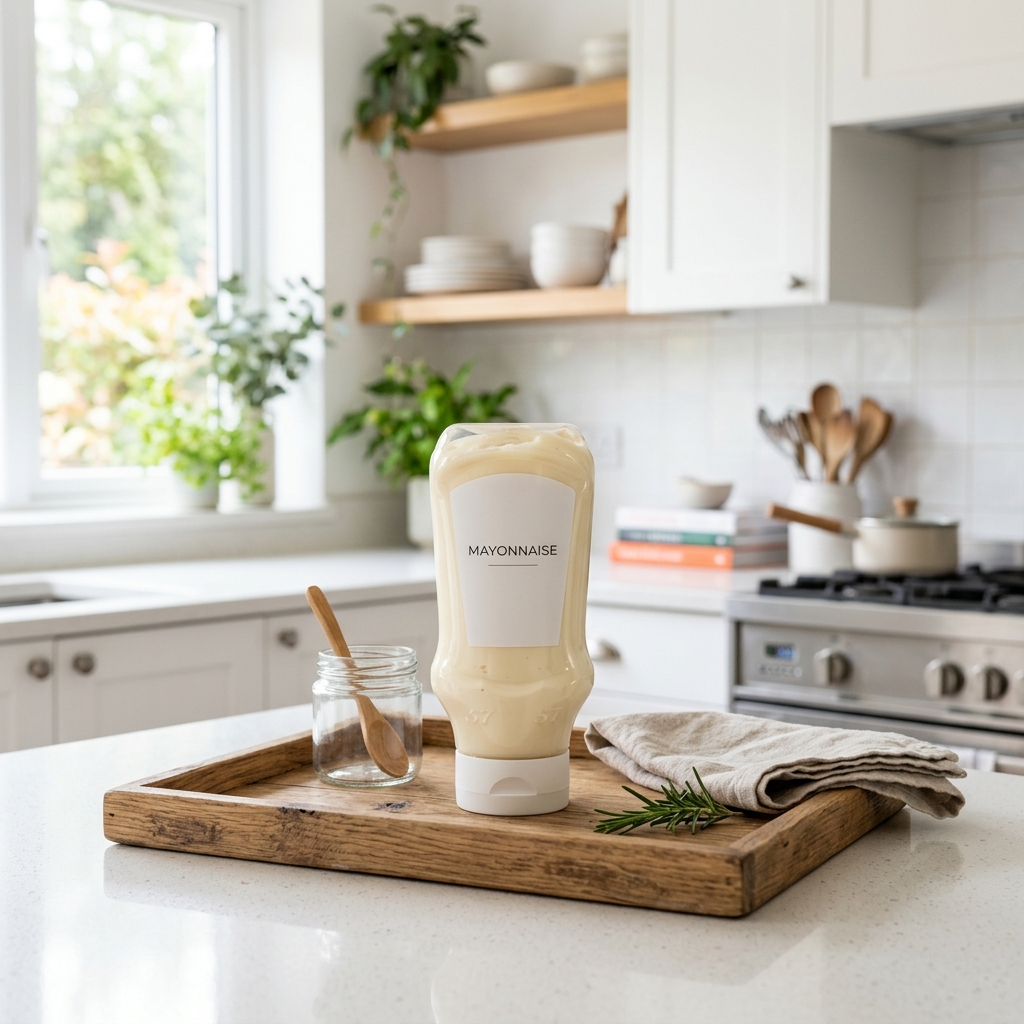
Have you ever left an opened jar or bottle of mayonnaise in the back of your fridge, only to find the oil and water split into greasy layers? 🧴
Mayonnaise is a classic emulsion made by precisely combining vegetable oil, egg yolk, and vinegar or lemon juice. It is delicate to temperature changes—especially freezing temperatures, which ruin the emulsion and cause oil separation.
In this guide, introduces a scientifically proven 3-step mayonnaise storage guide based on official guidelines from the FDA, USDA, and MFDS to keep your mayonnaise rich, smooth, and fresh after opening. 🛡️
Food Safety & Scientific Evidence
This content is based on FDA & USDA & MFDS.
 FreshSelf
Zero waste! Your smart storage assistant
FreshSelf
Zero waste! Your smart storage assistant








1. Scientifically Proven Storage Guide
Pantry before opening, refrigerate immediately after — Refrigerated Storage (60–90 Days) ❄️
Unopened mayonnaise can be kept in a cool, dry pantry away from sunlight, but opening it exposes the product to oxygen and microbes. 💡 Storage Tip: Always refrigerate mayonnaise once opened and consume it within 2–3 months (60–90 days) for optimal safety and flavor.
Store at 4–8°C on door shelves or main shelves — Maintain Optimal Refrigeration Temperature 🌡️
Temperatures that are too cold break the emulsion, while temperatures that are too warm encourage microbial growth and lipid oxidation. 💡 Storage Tip: Avoid the coldest back wall of the fridge. Storing mayonnaise on the refrigerator door shelf or the front of middle shelves (4–8°C / 39–46°F) prevents freezing while keeping it properly chilled.
Store squeeze bottles upside down — Minimize Air Exposure 🧴
For squeeze tube or bottle mayonnaise, reducing air contact inside the container is key to preserving flavor. 💡 Storage Tip: Storing the bottle inverted (cap-down) keeps the product packed near the nozzle, blocking air intrusion and ensuring fresh, easy dispense down to the last drop.
2. Essential Storage Rules and Cautions
When mayonnaise drops below 0°C (32°F), the bond between oil, egg yolk, and vinegar breaks, leading to emulsion breakdown and oil separation. Once separated, mayonnaise cannot be re-emulsified, so keep it away from sub-zero zones and direct cold air vents.
Leftover mayonnaise around the bottle lip oxidizes quickly upon contact with air and can invite mold or bacterial growth. Always wipe the cap or nozzle with a clean tissue immediately after use and seal it tightly.
📌 Frequently Asked Questions (FAQ)
Can I re-mix mayonnaise if the oil has separated? ▼
When mayonnaise breaks and oil separates, its structural stability is lost, and lipid oxidation has likely progressed. Whisking it back together will not restore its smooth original texture, so it is best to discard it for safety and quality.
Doesn't the vinegar in mayonnaise prevent it from spoiling at room temperature? ▼
While the acidic vinegar content in commercial mayonnaise helps inhibit bacterial growth, opening the bottle exposes the oil to oxygen, leading to oxidation and contamination. Refrigeration after opening is essential to maintain food safety and quality.