Have you ever bought beautiful, sweet raspberries only to find them moldy or mushy just a couple of days after putting them in the fridge? 🍓
Raspberries are a staple berry for breakfasts and desserts worldwide, but because of their very thin skin and hollow core, they have an extremely high respiration rate and spoil faster than almost any other fruit. Washing them increases surface water activity (Aw) close to 1.0, causing latent grey mold (Botrytis cinerea) spores to break down cell walls and rapidly proliferate within hours.
In this guide, we introduce a scientifically proven 3-step raspberry storage guide recommended by agriculture and food safety experts to maximize freshness. 🛡️
Food Safety & Scientific Evidence
This content is based on USDA & FDA & MFDS.
 FreshSelf
Zero waste! Your smart storage assistant
FreshSelf
Zero waste! Your smart storage assistant






1. Scientifically Proven Storage Guide
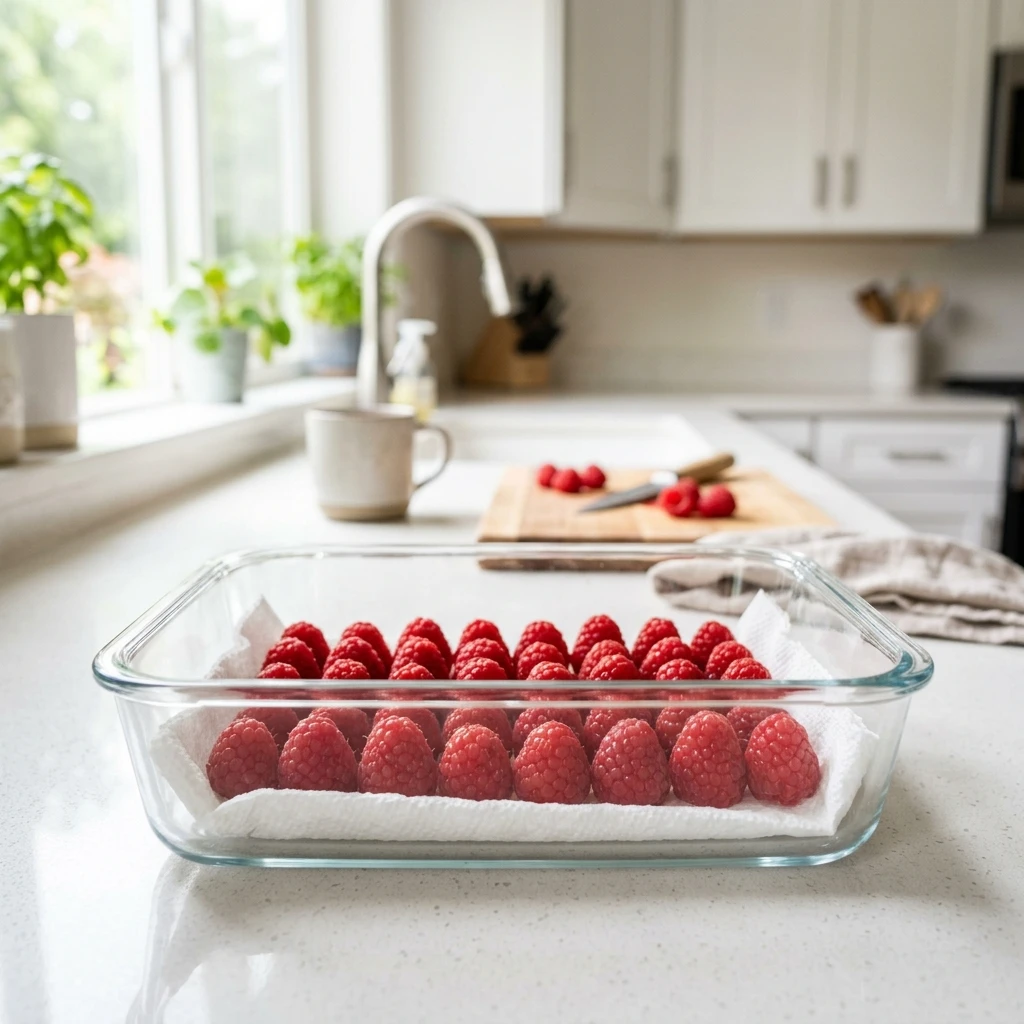
Arrange unwashed berries in a single layer on paper towels — Moisture Control & Cushioning 🧻
Stacking raspberries causes the bottom layers to crush under their own weight, trapping moisture and encouraging mold. 💡 Storage Tip: Line an airtight container with a paper towel to absorb ambient humidity, and place unwashed raspberries in a single layer without overlapping before sealing.
Refrigerate at ultra-low temperature (0–2°C / 32–35°F) — Cold Storage (2–3 Days) ❄️
Due to their high respiration rate, raspberries rapidly deteriorate and lose energy even at slightly elevated temperatures. 💡 Storage Tip: Store in the coldest part of your fridge (crisper drawer or dedicated chill zone) at 0–2°C. Proper cold storage keeps them fresh for 2–3 days (washed berries left wet last only 1 day).
Flash-freeze for long-term storage — Freezer Storage (10–12 Months) 🧊
Since fresh raspberries have a very short shelf life, freezing is essential if you cannot finish them within 3 days. 💡 Storage Tip: Gently rinse raspberries, dry them completely with paper towels, flash-freeze in a single layer on a tray, then transfer to freezer Ziploc bags (-18°C / 0°F). Great for smoothies and desserts for 10–12 months.
2. Essential Storage Rules and Cautions
Washing raspberries prior to storage pushes surface water activity (Aw) close to 1.0. This activates latent *Botrytis cinerea* (grey mold) spores, which break down cell walls and ruin the fruit within hours. Wash them only right before eating.
Crushed or leaking raspberries release juices that rapidly spread mold and decay to neighboring berries. Sort through your berries upon purchase and immediately consume or discard any damaged ones.
📌 Frequently Asked Questions (FAQ)
Why shouldn't raspberries be washed before storage? ▼
Raspberries have a hollow center that easily traps water and a delicate skin. Washing them raises the surface water activity (Aw) to nearly 1.0, which triggers latent *Botrytis cinerea* (grey mold) spores to germinate, dissolving cell walls and rotting the berry within hours.
Why do frozen raspberries collapse when thawed, and how should I use them? ▼
Raspberries have fragile cell walls that rupture during freezing; upon thawing, cell sap leaks out, making them mushy. It is best to use frozen raspberries directly without thawing in smoothies, yogurt toppings, or baking recipes.