Have you ever left an opened package of sausages in the fridge, only to find them slimy, discolored, or smelling off a few days later? 🌭
Sausages contain high levels of moisture, protein, and fat, making them an ideal breeding ground for foodborne bacteria like Listeria and Staphylococcus as soon as they are exposed to oxygen. Furthermore, lipid oxidation degrades their juicy texture and rich savory flavor.
In this guide, introduces a scientifically proven 3-step sausage storage guide based on USDA and food safety standards to preserve their snap, flavor, and safety. 🛡️
Food Safety & Scientific Evidence
This content is based on USDA & MFDS.
 FreshSelf
Zero waste! Your smart storage assistant
FreshSelf
Zero waste! Your smart storage assistant








1. Scientifically Proven Storage Guide
Seal airtight and refrigerate — Opened Storage (Raw 1–2 Days / Cooked 7 Days) 📦
Minimizing oxygen and excess surface moisture contact is key to preserving sausages. 💡 Storage Tip: Gently pat the surface dry with paper towels, wrap tightly with plastic wrap, and place inside an airtight Ziploc bag on a cold inner shelf (0–4°C / 32–39°F).
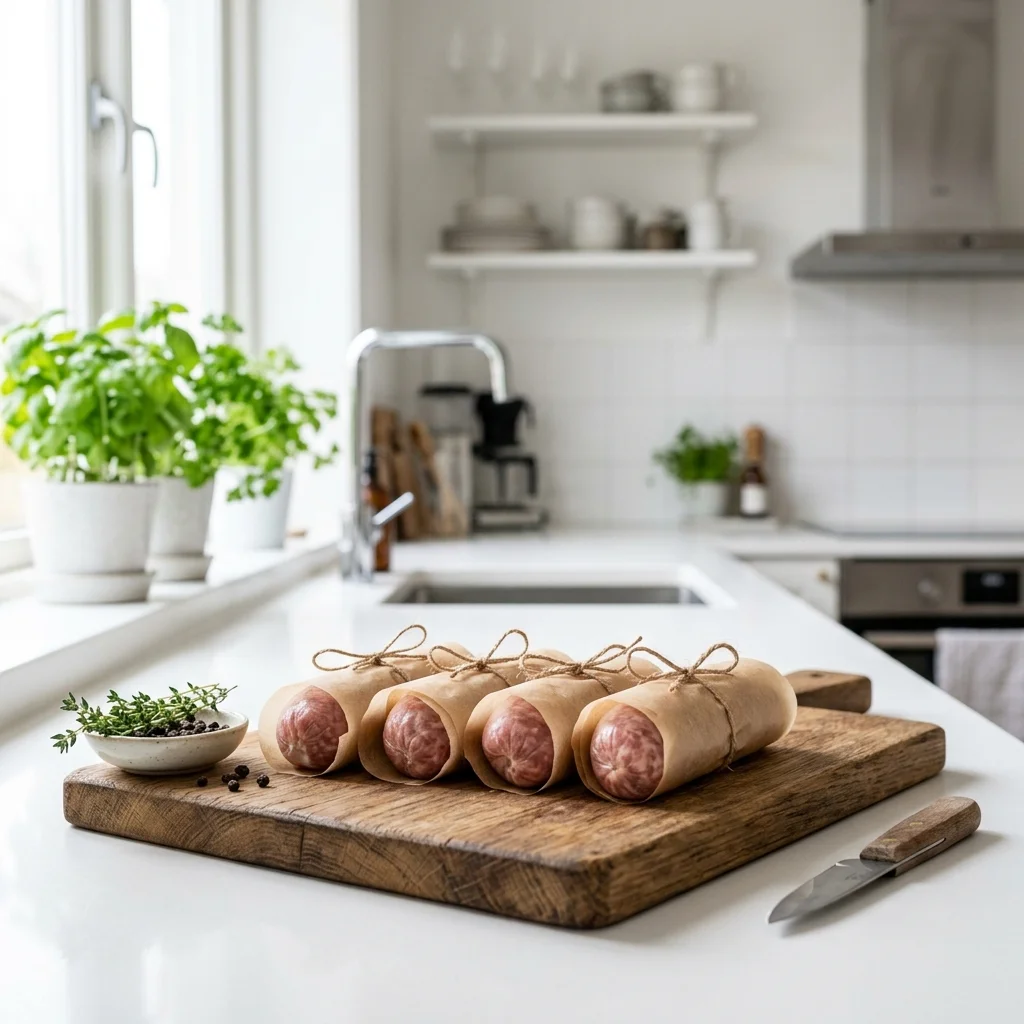
Portion individually with parchment paper to freeze — Long-Term Storage (1–2 Months) ❄️
This essential method prevents individual sausages from freezing together into a solid clump. 💡 Storage Tip: Wrap sausages individually in parchment paper or plastic wrap before placing them in a freezer Ziploc bag (-18°C or below). Easily remove as many as needed.
Degrease cooked sausages and store sealed — Cooked Storage (3–4 Days) 🍳
Cooked sausages can be stored safely for quick addition to future meals. 💡 Storage Tip: Thoroughly blot away excess grease and moisture with paper towels, let cool completely, and store in an airtight container in the fridge for 3–4 days.
2. Essential Storage Rules and Cautions
Opened plastic packaging allows oxygen and airborne microbes to enter, forming a slimy film on the sausage surface while absorbing fridge odors. Always wrap remaining sausages tightly in plastic wrap or seal in Ziploc bags.
Thawing at room temperature exposes sausages to the Danger Zone (4–60°C / 40–140°F), allowing bacteria to multiply rapidly. Always thaw slowly in the refrigerator or submerged in cold water while sealed.
📌 Frequently Asked Questions (FAQ)
How can I tell if sausages have gone bad? ▼
If the sausage surface feels sticky or slimy to the touch, has turned a dull grey or greenish color, or emits a sour, rancid smell, bacterial spoilage and fat oxidation have occurred and it should be discarded immediately.
Is it beneficial to blanch sausages in boiling water before cooking? ▼
Yes. Parboiling scored sausages in boiling water for 1–2 minutes helps leech out excess sodium, surplus fat, and food additives like sodium nitrite used during manufacturing, yielding a healthier and cleaner taste.