Have you ever bought fresh shallots for French or Southeast Asian dishes, only to find them sprouting or covered in blue mold shortly after? 🧅
Shallots feature higher dry matter solids and alliin genome concentrations than standard bulb onions, giving them rich culinary value. However, when relative humidity exceeds 70%, their physiological dormancy breaks, triggering rapid sprouting and blue mold (Penicillium) growth.
Based on official guidelines from the UC Davis Postharvest Technology Center and USDA, this 3-step scientific storage guide demonstrates how to keep shallots fresh for over 6 months without softening or sprouting. 🛡️
Food Safety & Scientific Evidence
This content is based on USDA & MFDS & UC Davis Postharvest Center.
 FreshSelf
Zero waste! Your smart storage assistant
FreshSelf
Zero waste! Your smart storage assistant







1. Scientifically Proven Storage Guide
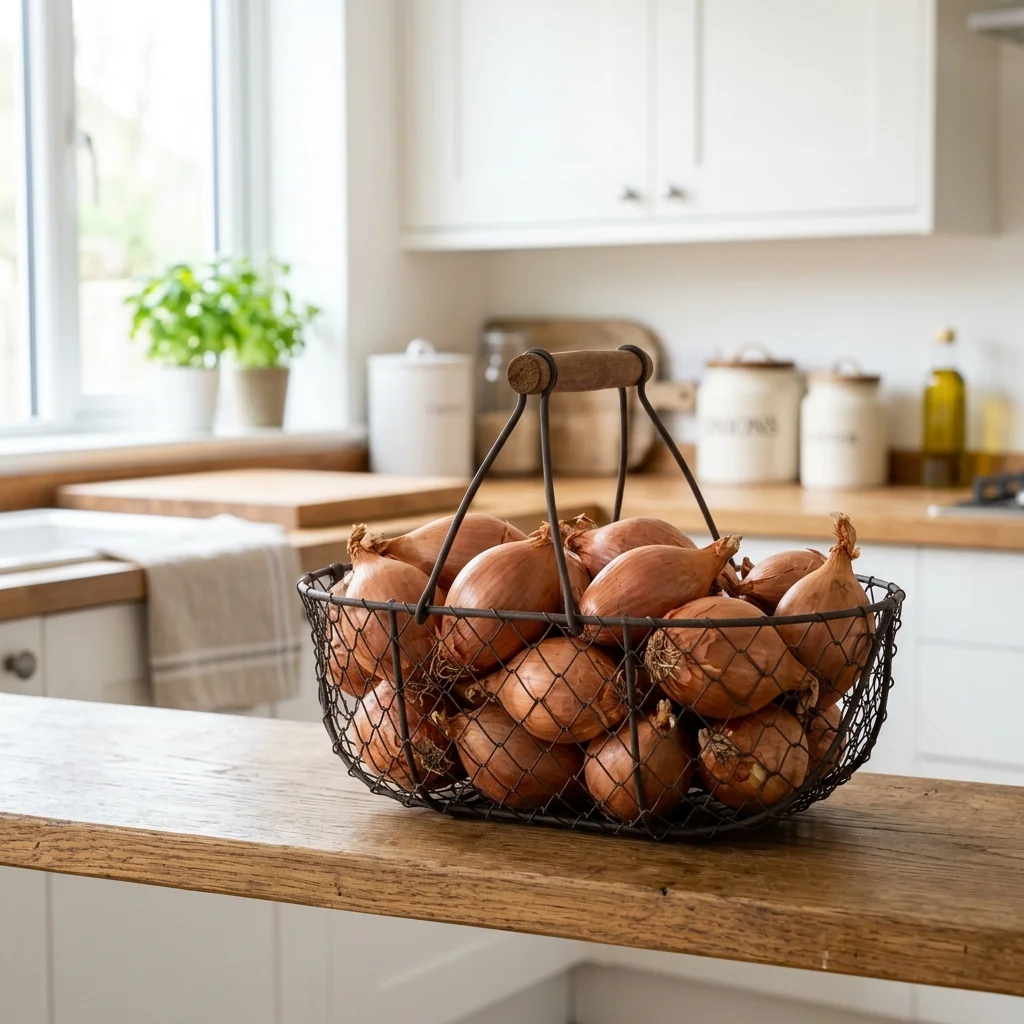
Store unpeeled shallots in a cool, dark, ventilated area at 10–12°C — Room Ventilation (180+ Days) 🧅
Whole shallots maintain stable dormancy when kept at 10–12°C (50–54°F) with 60–65% relative humidity, minimizing respiration. 💡 Storage Tip: Keep in a mesh bag or wire basket inside a dark, cool pantry or shade to preserve freshness for 6+ months.
Refrigerate peeled shallots in an airtight container — Peeled Cold Storage (14–21 Days) ❄️
Once peeled, exposure to open air dries out the flesh and invites bacterial contamination. 💡 Storage Tip: Thoroughly dry peeled shallots, place them in a paper towel-lined airtight container, and store in the fridge (1–4°C / 34–39°F) for 2–3 weeks.
Minced or leftover shallots frozen with olive oil — Long-term Minced Storage (30–60 Days) 🧊
Mincing leftover shallots is an efficient way to preserve flavor. 💡 Storage Tip: Place minced shallots in an ice cube tray, cover lightly with olive oil, and freeze. They can be dropped directly into pans when cooking.
2. Essential Storage Rules and Cautions
Storing whole unpeeled shallots in high-humidity refrigerator compartments traps moisture and breaks dormancy. The tissue collapses rapidly and fosters blue mold (*Penicillium*) growth. Always store them at cool room temperatures in a dry, ventilated space.
Moisture and gases emitted by potatoes promote sprouting in shallots. Direct sunlight increases internal temperature and respiration rates, causing them to wither quickly. Use breathable mesh bags kept in dark areas.
📌 Frequently Asked Questions (FAQ)
Why do whole shallots turn soft and moldy inside the refrigerator? ▼
Shallots break their physiological dormancy when relative humidity exceeds 70%. High moisture inside refrigerator crisper drawers prevents moisture evaporation, causing tissue breakdown and triggering blue mold (*Penicillium*) germination.
Is it safe to eat shallots that have begun sprouting? ▼
Unlike potatoes, sprouted shallots do not produce toxic solanine, making them safe to eat. However, sprouting drains nutrients and moisture from the bulb, making the flesh spongy and weakening its flavor. Store cool and dry to prevent sprouting.