Have you ever stored sunflower seeds only to find them smelling stale, rancid, and tasting bitter after a short time? 🌻
Sunflower seeds are exceptionally high in linoleic acid (a polyunsaturated fatty acid), making them highly susceptible to rapid chemical degradation when exposed to light, oxygen, and heat. When polyunsaturated fats react with oxygen, they break down into free fatty acids and hexanal, producing a distinct rancid odor and destroying nutrients.
In this guide, based on official guidelines from the USDA and the UC Davis Postharvest Technology Center, we share a 3-step scientific storage method to prevent lipid oxidation and preserve the nutty flavor and nutrition of sunflower seeds. 🛡️
Food Safety & Scientific Evidence
This content is based on USDA & MFDS & UC Davis Postharvest Center.
 FreshSelf
Zero waste! Your smart storage assistant
FreshSelf
Zero waste! Your smart storage assistant







1. Scientifically Proven Storage Guide
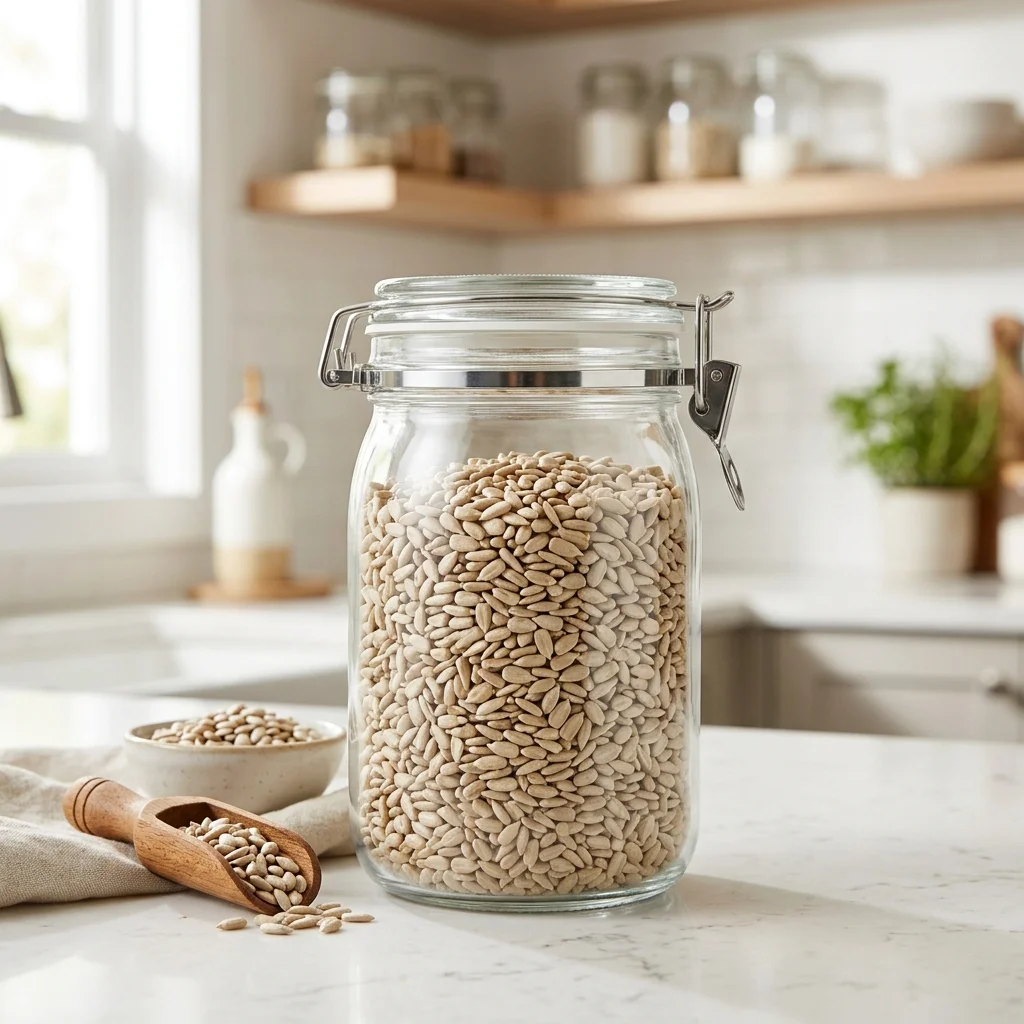
Store in an opaque airtight container with an oxygen absorber below 4°C — Cold Storage (180–360 Days) 🌻
Storing sunflower seeds below 4°C (39°F) reduces the rate of fatty acid oxidation to less than 25%. 💡 Storage Tip: Place seeds into an opaque container with an oxygen absorber packet and refrigerate (0–4°C) to keep them fresh and free from rancidity for 6 months to 1 year.
Keep small quantities sealed in a cool, dark pantry for short-term use — Room Temp Storage (60–90 Days) 📦
Seeds intended for immediate use can be kept at cool room temperature. 💡 Storage Tip: Seal in a dark cabinet below 15–20°C (59–68°F) away from direct sunlight, and consume within 2 to 3 months of opening.
Freeze in airtight bags for long-term storage exceeding 6 months — Frozen Storage (360+ Days) 🧊
Freezing bulk sunflower seeds virtually halts lipid oxidation, making it the safest long-term method. 💡 Storage Tip: Place seeds in freezer-safe bags, remove all excess air, seal tightly, and freeze at -18°C (0°F) or below.
2. Essential Storage Rules and Cautions
The high linoleic acid content rapidly undergoes autoxidation when exposed to UV light, heat, and oxygen. This produces hexanal—a byproduct of rancidity—which causes an off-odor and can lead to gastrointestinal distress if consumed.
Clear containers allow UV radiation to penetrate, accelerating fatty acid oxidation by several times. Always use opaque, light-blocking airtight containers or dark glass jars.
📌 Frequently Asked Questions (FAQ)
My sunflower seeds have a stale, rancid odor. Are they still safe to eat? ▼
No, do not consume them! The rancid smell indicates that linoleic acid has oxidized into hexanal and free fatty acids. Oxidized fats lose their nutritional value and can form free radicals that cause stomach upset, so they should be discarded immediately.
Why is cold or frozen storage necessary for sunflower seeds? ▼
Because sunflower seeds contain high levels of polyunsaturated fats, chemical rancidity begins within 2 to 3 months at room temperature. Lowering the storage temperature below 4°C slows oxidation to less than a quarter of its room-temperature rate, preserving fresh flavor for over a year.