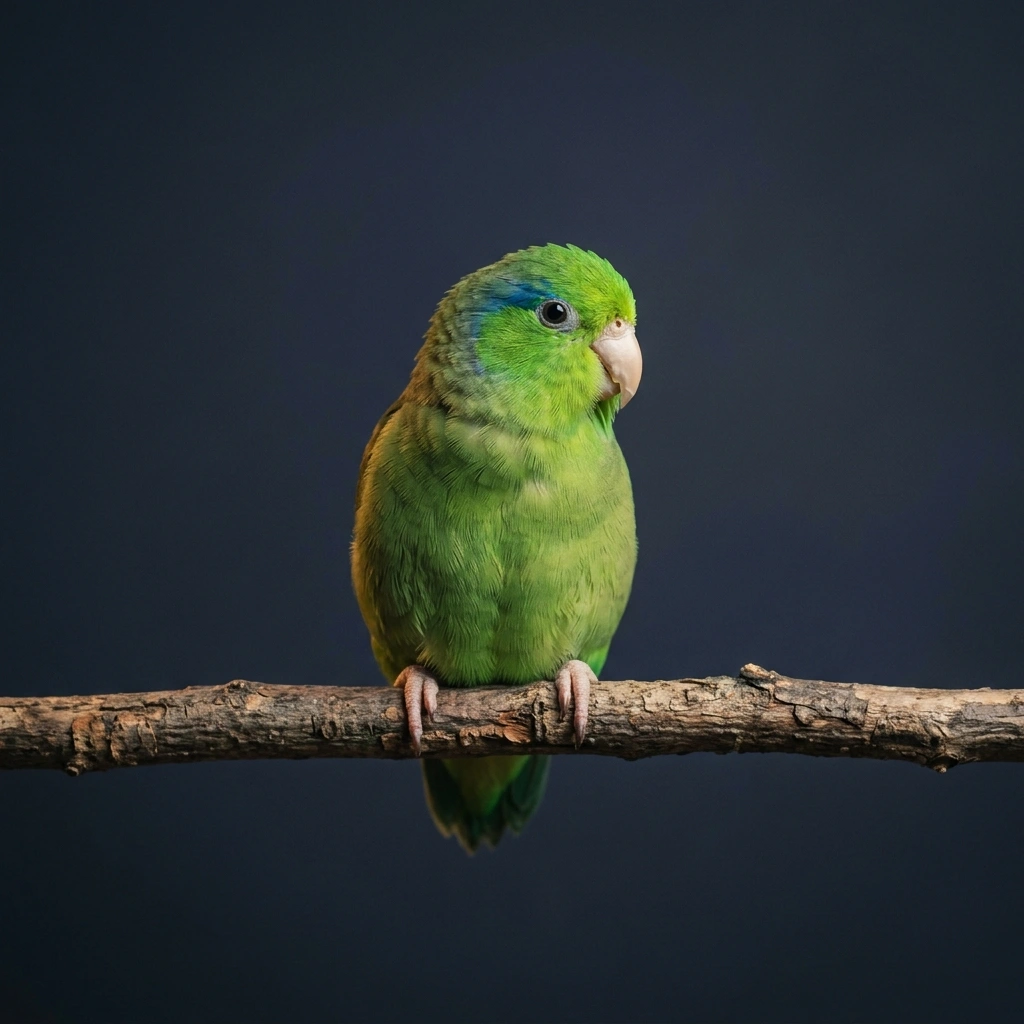
The Pacific Parrotlet (Forpus coelestis) is widely celebrated as the ‘world’s smallest parrot,’ measuring a compact 12 to 14 cm. Highly suitable for apartment living, they are immensely popular as beginner-friendly companion birds across North America and Europe. Despite their tiny size, they possess the bold confidence, sharp intelligence, and fearless stamina of a large macaw, earning them the nickname ‘big parrot in a small body.’ However, due to their strong self-esteem, they easily develop territorial behavior over their cage or play gym. Furthermore, unbalanced seed diets can quickly cause fatty liver disease, making high-quality formulated pellets essential. In this guide, we decode the Pacific Parrotlet’s instinctive signals and present a 3-step homecare routine for territorial stress relief and health management.
Veterinary & Behavioral Evidence
This content is based on Association of Avian Veterinarians (AAV) Advisory Standards & World Parrot Trust (WPT) Small Parrot Welfare Guidelines.
 FreshSelf
Keep pet food and supplements perfectly fresh!
FreshSelf
Keep pet food and supplements perfectly fresh!









1. Pacific Parrotlet Instincts: Beak Grinding and Territorial Feather Fluffing
Pacific Parrotlet Instincts: Beak Grinding and Territorial Feather Fluffing
Pacific Parrotlets are small birds with big personalities. When feeling threatened or territorial, they fluff up their feathers and stretch their necks to appear larger to intruders. Conversely, when feeling completely safe and contented, they close their eyes and produce a soft grinding sound with their beak ('Beak Grinding'), signaling deep relaxation.
2. Pacific Parrotlet (Forpus coelestis)‘s Body Language & Behavioral Signals
Beak Grinding
Softly grinding their beak while closing their eyes before sleep or in their owner's hands, signaling peak physical comfort and emotional contentment.
Keep the surrounding environment quiet and calm to help them settle into a restful sleep.
Territorial Feather Fluffing & Neck Stretching
Fluffing body plumage and extending the neck to look intimidating when perceiving an intruder near their cage, indicating territorial aggression.
Avoid reaching abruptly into their cage; open the cage door to let them step out voluntarily onto a training perch to reduce territorial stress.
3. Customized 3-Step Home Care Routine for Pacific Parrotlet (Forpus coelestis)
Morning: High-Nutrient Small Parrot Pellets & Fresh Vegetables
Avoid high-fat seed-only diets; provide formulated micro-pellets balanced with fresh, vitamin-rich vegetables like carrots and parsley.
Afternoon: Foraging Toys for High Activity & Supervised Free-Flight
Channel their high energy by deploying foraging puzzle toys and mini climbing ladders, allowing at least 1–2 hours of safe indoor free-flight time.
Evening: Gentle Bonding & 12-Hour Blackout Rest
Strengthen emotional bonds with gentle head scratches, then cover their cage with a blackout cover to ensure 10–12 hours of quiet sleep.
📌 Frequently Asked Questions (FAQ)
How should I handle a Pacific Parrotlet's territorial cage aggression and biting? ▼
Parrotlets view their cage as their personal fortress. Reaching directly inside can provoke defensive biting. Instead, open the cage door and let them step out onto a T-stand or training perch. If they bite, avoid shouting; calm disengagement is the most effective training response.
Are Pacific Parrotlets good at talking, and how loud are they? ▼
Parrotlets are surprisingly intelligent and can learn to repeat words and short phrases clearly. Their vocal decibel level is extremely low, consisting mostly of quiet chirps and chatters, making them one of the best parrot species for apartment dwellers.