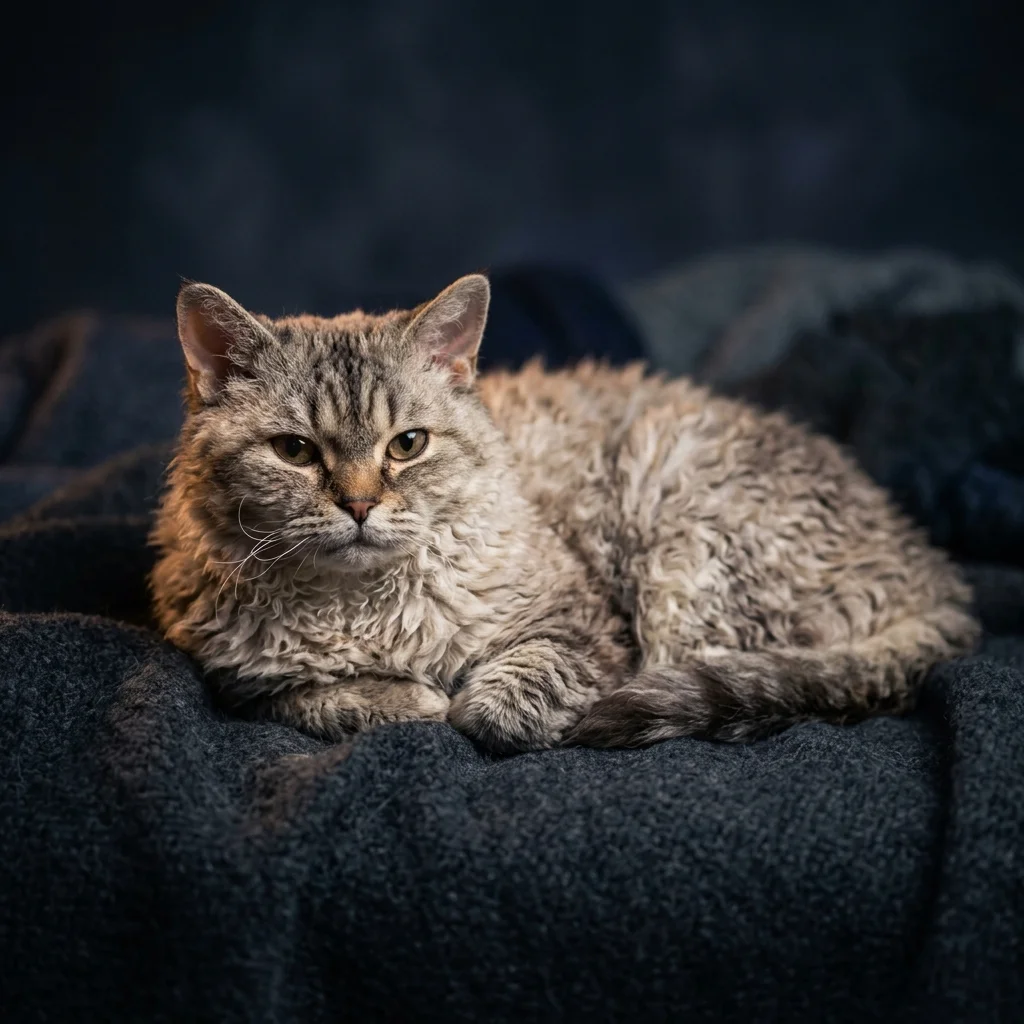
Often called the ‘cat in sheep’s clothing’, the Selkirk Rex is famous for its plush, sheep-like curly fur and patient, affectionate personality. Unlike other Rex breeds, their dominant curly coat gene creates thick, loose waves that can trap dead hair, increasing the risk of hairballs and matting. Furthermore, curling ear hair can trap sebum, requiring regular ear hygiene, while their Persian heritage requires monitoring for Polycystic Kidney Disease (PKDef). In this guide, details a 3-step daily routine for optimal coat and kidney health.
Veterinary & Behavioral Evidence
This content is based on Cat Fanciers' Association (CFA) Breed Standard and The International Cat Association (TICA) Clinical Guidelines.
 FreshSelf
Keep pet food and supplements perfectly fresh!
FreshSelf
Keep pet food and supplements perfectly fresh!









1. Selkirk Rex Physical Signals: Retching (Hairball Distress) and Head Shaking
Selkirk Rex Physical Signals: Retching (Hairball Distress) and Head Shaking
If a Selkirk Rex displays 'frequent dry retching or coughing up hairballs', it indicates excessive ingestion of unbrushed dead curly fur during grooming. On the other hand, 'frequent head shaking or ear scratching' points toward excess earwax buildup or ear canal irritation.
2. Selkirk Rex’s Body Language & Behavioral Signals
Frequent Hairball Retching (Hairball Distress)
Loose curly undercoat trapped near the skin is ingested during grooming, forming dense hairballs in the stomach.
Avoid fine-toothed combs that strip curls; gently remove loose hair with a wide-toothed wire comb and administer hairball control paste.
Ear Shaking & Scratching (Wax Buildup Signal)
Curled ear canal fur impedes ventilation, leading to accumulated wax, sebum, or localized otitis externa.
Clean inner ear folds gently with a gentle veterinary ear cleaner; consult a vet if redness, discharge, or odor occurs.
3. Customized 3-Step Home Care Routine for Selkirk Rex
Morning: Ear Inspection & Wide-Toothed Comb Coat Care
Inspect ears for excess wax. Lightly comb loose fur using a wide-toothed comb or fingers to maintain natural curl definition without causing frizz.
Afternoon: Hydration Station Management & Indoor Climate Control
Encourage fluid intake to protect kidney health against PKDef by setting up multiple water fountains and maintaining a stable temperature (20–24°C / 68–75°F).
Evening: Facial Fold Wipe & Hairball Paste Administration
Wipe secretions from around the curly whiskers and face, and administer a veterinary hairball remedy to facilitate gastrointestinal passage.
📌 Frequently Asked Questions (FAQ)
How often should I brush a Selkirk Rex? ▼
Avoid daily brushing with fine-toothed brushes, as this can break the curls and irritate skin. Brushing 2 to 3 times a week with a wide-toothed comb or wire pin brush is ideal to remove dead hair while preserving their lush wave pattern.
What is Polycystic Kidney Disease (PKDef) and how is it managed? ▼
PKDef is an inherited condition causing fluid-filled cysts to develop in the kidneys. Ensure parents are DNA-tested negative (PKDef Clear), promote abundant hydration, and schedule annual veterinary kidney ultrasounds and blood panels.