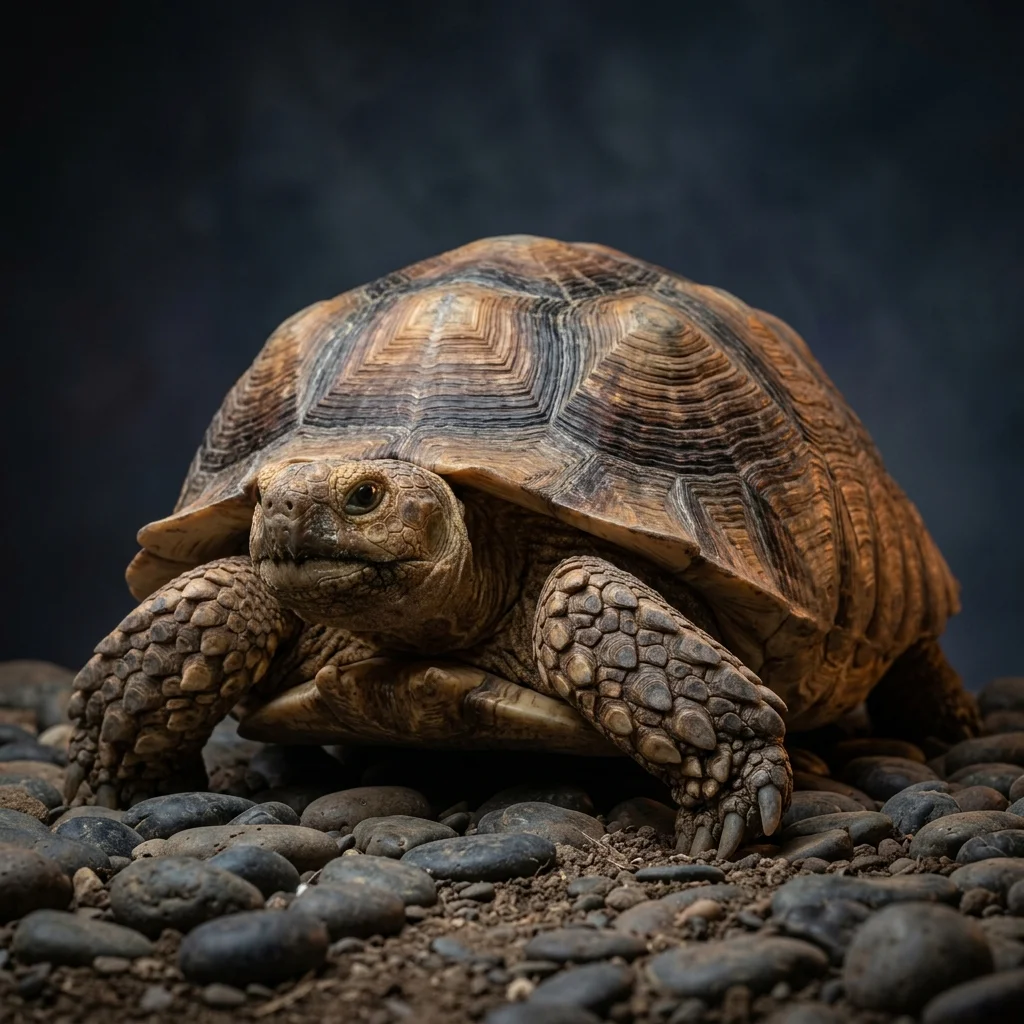
The Sulcata Tortoise is the 3rd largest tortoise, reaching 45–90 kg. As herbivores, high-fiber diets, UVB lighting, and hydration prevent shell pyramiding. This guide presents a 3-step care routine.
Veterinary & Behavioral Evidence
This content is based on Association of Reptilian and Amphibian Veterinarians (ARAV) & Tortoise Trust.
 FreshSelf
Keep pet food and supplements perfectly fresh!
FreshSelf
Keep pet food and supplements perfectly fresh!









1. Sulcata Tortoise Instincts: Head Retraction and Pyramiding Deformity
Sulcata Tortoise Instincts: Head Retraction and Pyramiding Deformity
They execute 'Head Retraction' when threatened. Excess protein and low humidity cause 'Pyramiding', where scutes grow vertically.
2. Sulcata Tortoise (Centrochelys sulcata)‘s Body Language & Behavioral Signals
Head Retraction
Pulling the head inside and exhaling as a defense response.
Avoid physical handling and retreat quietly.
Pyramiding Deformation
Vertical scute growth caused by excess protein or dryness.
Shift to high-fiber hay, adjust humidity, and enhance UVB exposure.
3. Customized 3-Step Home Care Routine for Sulcata Tortoise (Centrochelys sulcata)
Morning: UVB & Temperature Check (Hot 32–35°C / Cool 26–28°C)
Verify lamp functionality for vitamin D3 synthesis and thermal control.
Afternoon: High-Fiber Hay Feeding & Lukewarm Soaking
Offer Timothy hay and provide a lukewarm water soak for hydration.
Evening: Waste Clean-up & Night Temp Maintenance (22–24°C)
Remove food leftovers and maintain safe nighttime heating.
📌 Frequently Asked Questions (FAQ)
What is key to preventing pyramiding? ▼
A high-fiber diet (70%+ grasses/hay), 50–60% humidity, and sufficient UVB exposure for calcium absorption.
Is apartment housing suitable? ▼
Not recommended. Adults exceed 50 kg and require a spacious outdoor enclosure.