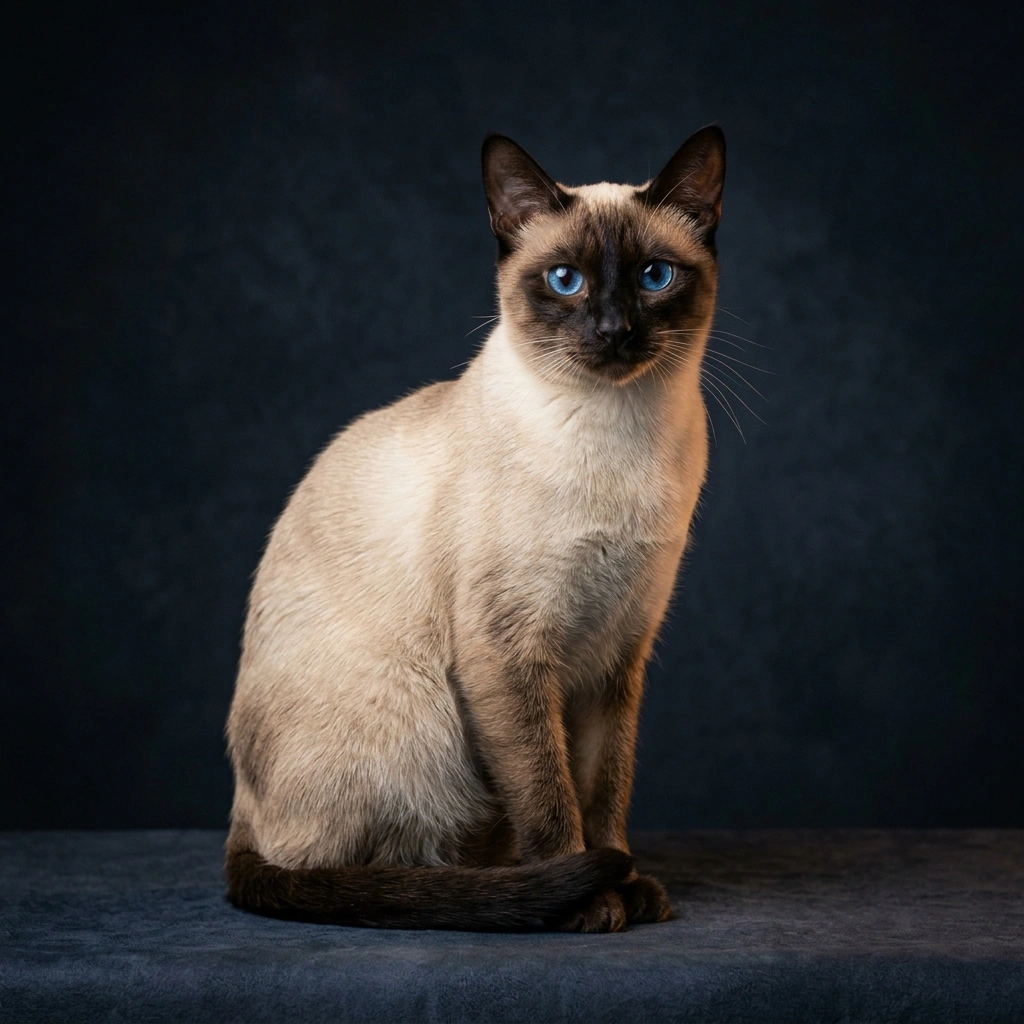
Siamese cats, originating from the royal family of Thailand, are elegant companion felines famous for their striking color points on their ears, face, and paws. Known for their dog-like, highly social temperament, they are uniquely vocal, constantly ‘talking’ to their owners in distinct tones. 🐱 However, this extreme attachment makes them highly vulnerable to separation anxiety. If left alone for long periods, Siamese cats easily suffer from severe distress, which manifests as endless howling or destructive scratching. In this guide, we explore Siamese body language and provides a 3-step care routine to relieve separation stress and keep them emotionally stable.
Veterinary & Behavioral Evidence
This content is based on Cat Fanciers' Association (CFA) Official Breed Guide & AAFP Feline Behavioral Protocols.
 FreshSelf
Keep pet food and supplements perfectly fresh!
FreshSelf
Keep pet food and supplements perfectly fresh!








1. Siamese Body Language: Signs of Complete Trust and Possessiveness
Siamese Body Language: Signs of Complete Trust and Possessiveness
Siamese cats show their affection in clear, interactive ways with rich calming signals. Typical signals include 'slow blinking' and 'bunting'. Closing their eyes slowly while maintaining eye contact is a statement of ultimate safety and peace—closing eyes in front of another in the wild is a risky move, proving they view you as a completely harmless companion. Rubbing their cheeks or forehead against your hand is their way of sharing comforting facial pheromones and marking you as their trusted person.
2. Siamese’s Body Language & Behavioral Signals
Slow Blink
A display of complete safety and deep affection, often described as a feline kiss.
Lock eyes gently and return the gesture by closing and opening your eyes slowly for 1.5 seconds.
Bunting
An action leaving their facial scent (pheromones) to mark you as their safe person and confirm attachment.
Gently scratch their chin or cheeks, allowing them to happily exchange scents with you.
3. Customized 3-Step Home Care Routine for Siamese
Morning: 10-Minute High-Contact Greeting to Prevent Anxiety
To ease separation anxiety in this sensitive breed, spend 10 minutes petting your Siamese and speaking softly to them under the blanket immediately after waking up.
Afternoon: Interactive Play and Food Puzzle Placement
Keep them busy during the day with treat puzzles or foraging toys. When you return home, dedicate at least 15 minutes to high-energy feather wand chase games.
Evening: Warm Bedding Setup to Prevent Body Chill
Because Siamese cats are short-haired with low body fat, they get cold easily. Maintain warm indoor temperatures in the evening and provide a cozy, dome-shaped heated shelter.
📌 Frequently Asked Questions (FAQ)
Why does my Siamese cat keep meowing constantly at night? Is something wrong? ▼
This is a natural vocal trait of the breed. They often meow to communicate boredom or seek interaction. If they are not sick or injured, avoid responding to their night cries and instead engage in intensive play during the day to tire them out.
How do I reduce my Siamese cat's separation anxiety when I go to work? ▼
Set up food puzzle toys or treat scavenger hunts before leaving to distract them. Avoid emotional goodbyes (like picking them up and kissing them repeatedly) at least 10 minutes before stepping out, as this can worsen their anxiety.