Have you ever left fresh lemons in a fruit bowl on the counter only to find them dry out, turn rock-hard, or grow blue-green mold in the fridge? 🍋
Although lemons have a thick rind, they are citrus fruits whose moisture continuously evaporates through microscopic pores on their skin. When exposed to ambient room temperature, their skins shrink and juice dries up within a week. Conversely, trapped moisture in sealed spaces causes green and blue mold (Penicillium) to thrive.
In this guide, shares a scientifically proven 3-step storage guide based on research from the USDA and FSA to lock in moisture, block mold, and keep your lemons bursting with juice for over a month. 🛡️
Food Safety & Scientific Evidence
This content is based on USDA & FSA & MFDS.
 FreshSelf
Zero waste! Your smart storage assistant
FreshSelf
Zero waste! Your smart storage assistant






1. Scientifically Proven Storage Guide
Remove all surface moisture completely — Prevent Mold & Soft Rot 🍋
Despite their thick rind, any moisture left on the skin allows fungal spores to invade. 💡 Storage Tip: Thoroughly wipe off any moisture with paper towels or a dry cloth, then air-dry them in a shady, ventilated spot for 5–10 minutes before storing.
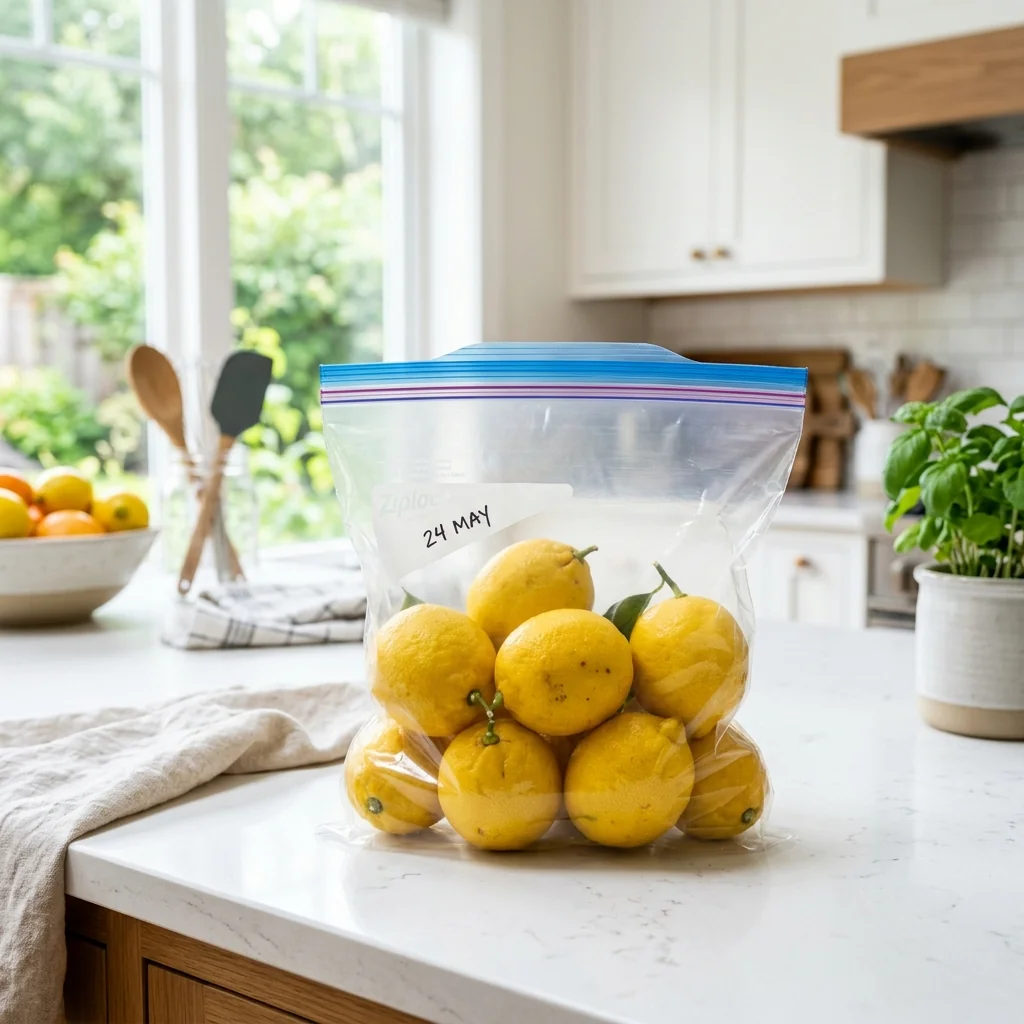
Place in a Ziploc bag and squeeze out air — Airtight Seal & Moisture Retention 📦
Continuous exposure to air accelerates water loss through rind pores. 💡 Storage Tip: Place dried lemons inside a Ziploc bag, press out as much excess air as possible, and seal tightly. Restricting air contact prevents the peel from shrinking and hardening.
Store on the middle shelf of the refrigerator — Cold Storage (30–45 Days) ❄️
Sealed refrigeration extends freshness several times longer than room temperature counter storage. 💡 Storage Tip: Keep the sealed lemon bag on the middle shelf of your refrigerator (approx. 4°C / 39°F). This prevents drying and hardening, keeping lemons juicy for over a month.
2. Essential Storage Rules and Cautions
Lemons that are bruised or starting to rot release large amounts of Penicillium mold spores. Even a single moldy lemon in a sealed bag can rapidly spoil all surrounding healthy lemons. Always sort and separate damaged lemons upon purchase.
Washing or scrubbing lemons under tap water removes their natural protective wax coating and traps surface moisture, creating an ideal environment for mold growth. Lightly wipe off dust with a dry cloth and wash lemons right before use.
📌 Frequently Asked Questions (FAQ)
Why should lemons be stored in a refrigerated Ziploc bag rather than a fruit bowl at room temperature? ▼
At room temperature (15–25°C / 59–77°F), lemons continuously lose moisture through rind pores, causing them to turn hard and dry out within a week. Storing them sealed in a Ziploc bag at 4°C slows fruit respiration and locks in moisture, maintaining maximum juiciness and freshness for over a month.
How should I store leftover cut or sliced lemons? ▼
Cut lemons suffer rapid oxidation of Vitamin C and moisture loss when exposed to air. Wrap the cut surface tightly with plastic wrap (eliminating air gaps) or place cut-side down in a small airtight container and refrigerate for 3–5 days. For long-term storage, slice them and freeze below -18°C (-0.4°F) to drop directly into teas or beverages.